

How to Preserve Flowers Without Resin: 8 Proven Ways (2026)

TL;DR
Resin isn’t the only way to preserve flowers, and it’s often not even the best way. It yellows within 12 months, generates heat that can scorch petals, and if the pour fails, your flowers are gone forever. Better alternatives include pressing (lasts decades with archival framing), silica gel drying (keeps 3D shape and color), glycerin soaking (keeps petals soft), and professional preserved flower art (display-ready, no DIY required). This guide covers eight proven methods ranked by cost, longevity, and skill level so you can pick the right one for your situation.
You kept the bouquet. Maybe it’s from a wedding, a memorial service, a proposal, or a Tuesday that simply mattered. Now you want to make it last. Resin seems like the obvious choice until you read the horror stories: yellowing blocks, trapped air bubbles, cracked pours, and flowers ruined beyond recovery. Your instinct to search for how to preserve flowers without resin is a good one.
The problems with resin are well documented, and the alternatives are numerous. Some cost nothing. Some produce results that outlast resin by decades. This guide walks through every viable method, with honest numbers on cost, longevity, and the tradeoffs nobody else mentions.
One thing before we start: timing matters more than method. Start the preservation process as soon as possible after receiving or cutting your flowers. Every hour of delay means moisture loss, wilting, and color degradation that no technique can reverse.
Why People Are Moving Away from Resin
Resin flower preservation looks spectacular on Instagram. In real life, the results often disappoint.
The biggest issue is yellowing. Resin can begin turning yellow after about 12 months, and thicker pieces show discoloration faster. A thin resin pendant might hold up for years, but a large floral block will age visibly. UV-stabilized resin slows this down but doesn’t prevent it entirely.
Then there’s the chemistry. Resin curing is an exothermic reaction, meaning it generates significant heat. In thick pours, temperatures can climb high enough to cause cracking, warping, or internal scorching. Delicate flower petals are especially vulnerable.
Working with resin also involves handling chemicals that can be harmful if not used properly. It’s a plastic-based material, making it less sustainable than other preservation methods.
Perhaps the most painful risk is irreversibility. If the pour goes wrong, the flowers are destroyed. There’s no undo button. Even professional resin preservation studios acknowledge the limitations. One well-known resin specialist, dbandrea, has said publicly that they encourage customers to get a pressed piece over a floral block because pressed preservation ages better and offers more control.
The good news: you have plenty of alternatives. Here’s every method worth considering when you want to preserve flowers without resin.
At-a-Glance Comparison Table
| Method | DIY Cost | Time Needed | Longevity | Keeps 3D Shape? | Skill Level | Best For |
|---|---|---|---|---|---|---|
| Air Drying | Free | 2–4 weeks | 1–3 years | Partial | Beginner | Rustic decor, bouquets |
| Pressing | $5–$50 | 2–4 weeks | Decades (with UV glass) | No (flat) | Beginner | Framed art, cards |
| Silica Gel | $15–$130 | 2–7 days | Years | Yes | Intermediate | Shadow boxes, 3D displays |
| Glycerin | $10–$25 | 2–6 weeks | 6 months–several years | Yes | Intermediate | Foliage, soft-touch feel |
| Wax Dipping | $5–$15 | 1 hour | Weeks to months | Yes | Beginner | Centerpieces, short-term |
| Microwave | $0–$40 | 2–5 minutes | 1–3 years | No (flat) | Beginner | Quick projects, small flowers |
| Freeze-Drying | $150–$1,000+ (pro service) | 10–15 days | Years to decades | Yes | Professional | Premium wedding keepsakes |
| Professional Preserved Art | $599.95+ | Ships ready | 2–5 years | Yes | None (done-for-you) | Gifts, weddings, memorials |
1. Air Drying (Hanging)
Best for: Rustic decor, lavender bundles, and anyone who wants a free, zero-skill method.
Air drying is the simplest form of flower preservation. You’re removing moisture so the flowers don’t rot. That’s it. No special equipment, no chemicals, no learning curve.
How to do it:
- Take small bundles of flowers (3–6 stems each) and secure the stems with twine, rubber bands, or wire.
- Hang them upside down in a dry, dark, well-ventilated area.
- Wait 2 to 4 weeks until the flowers feel papery and stiff.
- After removing the flowers from the hangers, coat them with an unscented hairspray to create a protective barrier and reduce brittleness.
Cost: Free to under $5 for twine and hairspray.
Longevity: 1 to 3 years before significant fading, brittleness, or mold.
What works well: Lavender, baby’s breath, roses (smaller varieties), statice, strawflowers, and most wildflowers.
Honest tradeoffs:
- Colors will fade. This is unavoidable with air drying alone.
- Some flowers shrivel or lose their shape, especially dense, moisture-rich blooms like lilies or tulips.
- Direct sunlight accelerates fading dramatically.
- If any moisture remains trapped inside, mold can develop.
Practitioners at Bloom & Make put it bluntly: air-dried flowers haven’t been processed to retain their color or shape. Over time, they fade, become brittle, and can develop mold. It’s technically preservation, but it’s the most basic form.
The bottom line: Air drying works for decorative purposes where a faded, rustic aesthetic is the goal. For flowers tied to a significant memory, you’ll want a method with better color and longevity.
2. Pressing (Book or Flower Press)
Best for: Framed botanical art, bookmarks, greeting cards, and any project where a flat, elegant look is ideal.
Pressing flowers is a centuries-old technique that still produces some of the longest-lasting results of any preservation method. Properly pressed and framed flowers with archival materials and UV-protective glass can last decades. Practitioners report seeing pressed flower pieces from the late 1990s that still look lovely.
How to do it:
- Place flowers between sheets of parchment paper or wax paper.
- Sandwich them inside a heavy book or a purpose-built flower press.
- Stack additional weight on top.
- Change the paper every few days to wick away moisture and prevent mold.
- Wait 2 to 4 weeks until fully dried and flat.
Cost: $5–$30 using books you already own, or $20–$50 for a dedicated flower press.
Longevity: Decades when framed behind UV-protective glass with archival materials.
Pro tip from Wilted Wonders: Thick flowers like roses press best when you disassemble them and press each petal individually. Most people don’t realize that the perfect rose in a professional frame was likely deconstructed and rebuilt petal by petal. That level of control is what separates crisp, vibrant results from brown, crumbly ones.
Honest tradeoffs:
- Flowers are completely flat. If you want 3D volume, pressing isn’t the method.
- Thick or highly dimensional blooms (peonies, dahlias, garden roses) require deconstruction, which takes patience and practice.
- Without changing the paper regularly, mold will ruin everything.
- Colors shift over time, especially whites, which can turn cream or yellowish.
Pressed flowers are among the best ways to preserve flowers without resin if your goal is long-term wall art. For graduation flowers, a pressed arrangement framed with a personal message makes a meaningful keepsake. Explore pieces like Luxe Bloomia’s graduation preserved flower art for a sense of what professional results look like.
3. Silica Gel Drying
Best for: Preserving 3D flower shape and vibrant color for shadow boxes and display cases.
If keeping the full dimensional beauty of your flowers matters, silica gel is the best DIY method available. It’s a desiccant that absorbs moisture rapidly while allowing petals to hold their original form. The color retention is remarkable, sometimes even intensifying the original hues.
How to do it:
- Pour a 1-inch layer of silica gel crystals into an airtight container.
- Place flowers face-up on the gel layer.
- Gently spoon more silica gel around and over the flowers until completely covered.
- Seal the container and wait 2 to 7 days. Most flowers dry in 2 to 4 days, though roses and zinnias with thicker cores may need a full week.
- Carefully brush off excess gel with a soft paintbrush.
Cost: $15–$30 for small projects. For a full wedding bouquet, expect higher costs. One DIY practitioner reported spending $130.96 on 23 pounds of silica gel for her complete bouquet. The gel is reusable, though, so that’s a one-time expense.
Longevity: Years when kept in a dry environment.
Safety warning: Practitioners at Wilted Wonders share that there are safety hazards of working with silica gel that many people aren’t aware of initially. It can cause skin and eye irritation, and the tiny particles are harmful to breathe in. Always wear a mask and gloves.
Honest tradeoffs:
- The upfront cost for large projects is significant.
- Flowers become fragile once dried, so handling requires care.
- You need airtight containers large enough for your blooms.
- Without a sealant (hairspray, clear acrylic spray), dried flowers will reabsorb ambient moisture over time.
Budget alternative: Can’t afford silica gel? Non-clumping clay cat litter works as a substitute. It’s slower and less precise, but it pulls moisture from petals using the same principle. Another option: mix equal parts yellow cornmeal and borax with three tablespoons of non-iodized salt per batch. This homemade desiccant appears in heritage gardening guides but is absent from most modern flower preservation articles.
Yet another old-fashioned approach is very fine, dry, clean sand. Sift it before use, and if your sand is damp, bake it in the oven at 250°F until dry. It’s slow (1 to 3 weeks) but essentially free.
4. Glycerin Preservation
Best for: Keeping flowers and foliage soft, pliable, and touchable rather than brittle.
Glycerin preservation works differently from every other method on this list. Instead of removing moisture, it replaces the water inside plant cells with a glycerin solution. The result is petals and leaves that feel almost fresh, with a subtle sheen and flexibility that dried flowers lack entirely.
How to do it:
- Mix one part glycerin with two parts lukewarm water.
- Lightly crush the bottom inch of each stem (this step is critical; skipping it is a common reason glycerin preservation fails, according to Fiore Designs).
- Place stems in the glycerin solution in a vase or jar.
- Store in a cool, dark location for 2 to 6 weeks. Most roses take about two to three weeks to fully absorb the solution.
- Flowers are ready when petals feel supple but no longer wet.
Cost: $10–$25 for glycerin and supplies.
Longevity: Varies widely depending on the flower type. Some sources cite 6 to 12 months, while others report glycerin-preserved foliage lasting several years, though colors may shift over time. In sealed display conditions, some practitioners say glycerin-based preservation can last up to a decade.
Important limitation: Mississippi State Extension notes that glycerin is best used to preserve foliage rather than flowers. Flower petal tissues are soft and may not hold up well after uptake. Eucalyptus, ferns, magnolia leaves, and hydrangeas tend to produce the best results.
Honest tradeoffs:
- Color changes are common. White roses can turn the color of old paper. Some flowers darken significantly.
- Not all flower types absorb glycerin evenly, leading to inconsistent results.
- The 2 to 6 week timeline requires patience.
- Petals can become slightly translucent or waxy in appearance.
For those who love the glycerin-preserved aesthetic but don’t want to manage the process, professional preserved flower art offers the same soft, real-flower feel in a display-ready format. Luxe Bloomia’s Love Grows piece, for example, showcases what glycerin-based preservation looks like when done by professionals, with real flowers arranged in museum-style framing that’s ready to hang.
5. Wax Dipping
Best for: Short-term centerpieces, single sentimental stems, and event decorations that need to look fresh for a few weeks.
Wax dipping coats flowers in a thin shell of paraffin or soy wax, essentially encasing them in a protective layer that holds in moisture and maintains the bloom’s shape temporarily. Think of it as amber preserving an insect, but with a porcelain-like finish.
How to do it:
- Melt paraffin or soy wax and bring it to 120–150°F (sources vary on the exact temperature, but this range is safe).
- Hold a flower by its stem and dip it quickly into the wax.
- Rotate to allow even coverage, then hold the flower upside down to let excess wax drip off.
- Set on parchment paper to cool.
Cost: $5–$15 for a block of wax.
Longevity: About one month. However, you can extend this significantly by pre-treating live flowers with a glycerin solution (2 parts warm water to 1 part glycerin) for 3 to 5 days before wax dipping. This combination can make wax-dipped flowers last indefinitely, according to some practitioners.
Flower selection matters: Choose the freshest flowers with sturdy structure and separated petals that can support the thin wax coating. Garden & Gun recommends camellia, gardenia, magnolia, hellebore, tulip, and daffodil. Gauzy, delicate blooms like azalea or poppy don’t hold up.
Honest tradeoffs:
- Without glycerin pre-treatment, this is a very short-term solution.
- Getting the wax temperature right takes practice. Too hot and you’ll cook the petals, too cool and the wax won’t coat evenly.
- Waxed flowers are fragile and can chip or crack.
- The wax layer slightly mutes colors and adds a waxy sheen that not everyone likes.
Wax dipping is a fun option for Mother’s Day arrangements or event table settings where you need flowers to look fresh for a specific occasion. For a Mother’s Day gift that lasts years instead of weeks, something like Luxe Bloomia’s I Love You Mom preserved flower frame might be worth considering alongside a wax-dipped stem.
6. Microwave Drying

Best for: Impatient crafters and small, delicate flowers that need to be preserved quickly.
This is the fastest way to preserve flowers without resin. What takes weeks with other methods takes minutes in a microwave. You can use a specialized Microfleur press or simply sandwich flowers between paper towels.
How to do it:
- Place flowers between layers of paper towels or parchment paper, or load them into a Microfleur press.
- Microwave at low power in 30-second intervals.
- Check between intervals. Most flowers dry in 2 to 3 minutes total.
- Let cool completely before handling.
Cost: Free with paper towels you already have, or $25–$40 for a Microfleur press.
Longevity: 1 to 3 years, comparable to air drying.
Honest tradeoffs:
- Very easy to overheat flowers, making them fragile and brown.
- Practitioners at Wilted Wonders report that the microwave press can make thicker white flowers turn cream or brown. They also found that overheated flowers become significantly more fragile.
- Works best for small stock flowers and flat blooms. Thick, multi-layered flowers don’t dry evenly.
- Results are flat (like pressing), not 3D.
Wilted Wonders notes they rarely use the microwave press unless it’s for small stock flowers. It’s a tool for quick experiments, not for preserving a cherished wedding bouquet.
7. Freeze-Drying (Professional Service)
Best for: Museum-quality 3D bouquet preservation for those with budget and patience.
Freeze-drying produces the most lifelike results of any flower preservation method. Flowers are frozen, then moisture is removed through sublimation in a vacuum chamber over 12 to 15 days. The result is a 3D flower that looks almost fresh, typically displayed in shadow boxes or glass domes.
How it works: This isn’t a DIY method for most people. The equipment costs $10,000 or more, with some providers investing in $30,000 state-of-the-art freeze-drying machines. You’ll be sending your flowers to a professional service.
Consumer cost: Basic preservation services like pressing or simple drying usually cost $150 to $250. More ornamental framed or specialized keepsakes run $300 to $500. Customized specialty items, including large shadow boxes and sublimated 3D displays, can cost $700 to $1,000 or more.
Longevity: Years to decades when kept away from direct sunlight and moisture.
Honest tradeoffs:
- Freeze-dried flowers are extremely delicate and can break with minimal handling. They need to be kept in protective displays.
- The process takes 2 to 3 weeks plus shipping time.
- Expensive, especially for large arrangements.
- Not all flower types freeze-dry equally well. Some lose color or develop texture changes.
Freeze-drying is the gold standard for brides who want their exact bouquet preserved in three dimensions. But the cost, fragility, and turnaround time make it impractical for many people, which is why other preservation methods (and professional preserved flower art) fill an important gap.
8. Professional Preserved Flower Art
Best for: People who want a finished, display-ready piece without any DIY effort, as a gift or lasting keepsake.
Not everyone wants to spend weeks pressing, drying, or soaking flowers. Professional preserved flower art takes real flowers, preserves them using glycerin-based or similar solutions, and arranges them into finished artwork that’s ready to hang the moment it arrives.
This approach solves the core problem that drives people to search for flower preservation in the first place: they want something beautiful that lasts, without the risk of ruining irreplaceable blooms through trial and error.
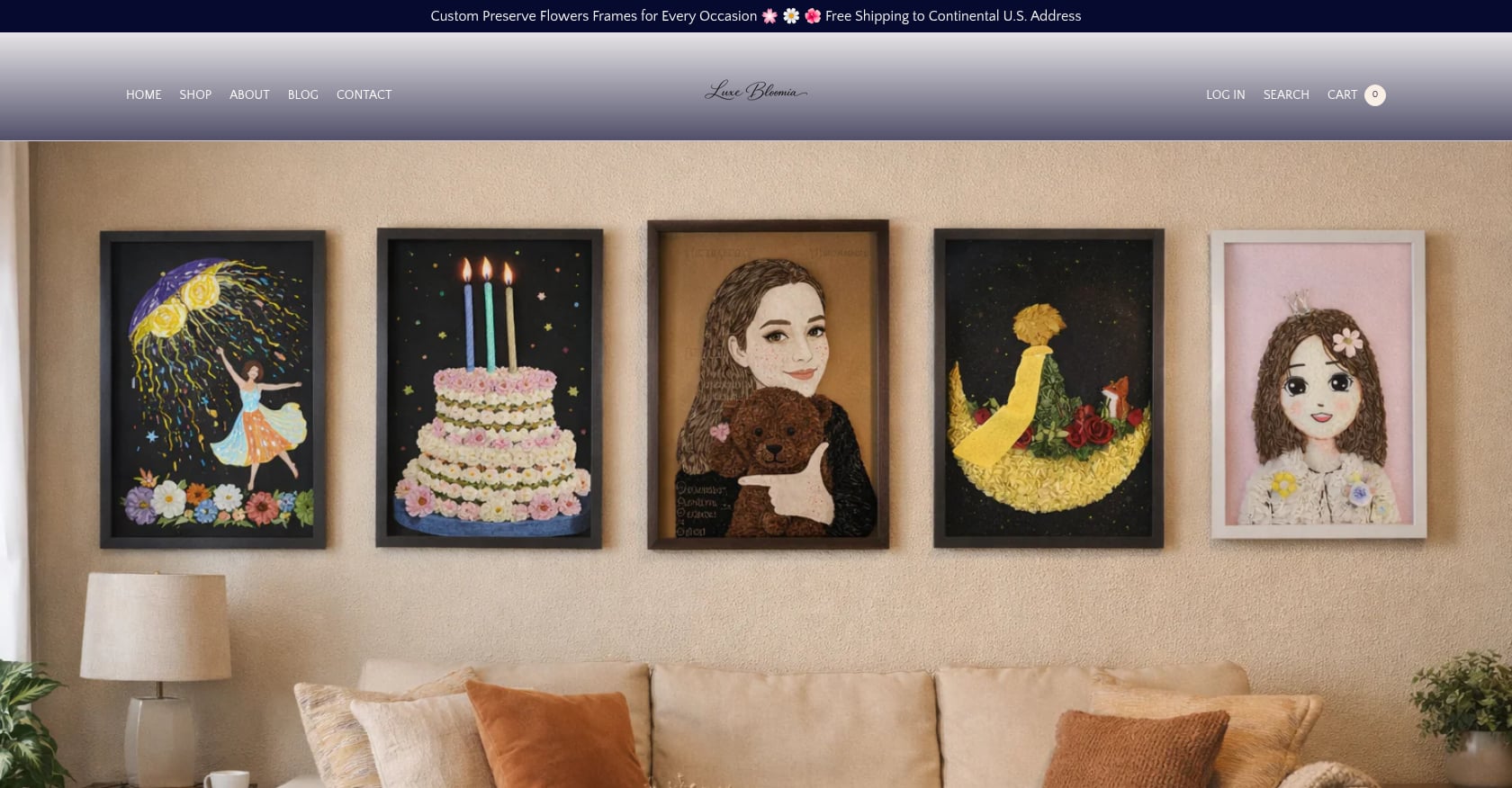
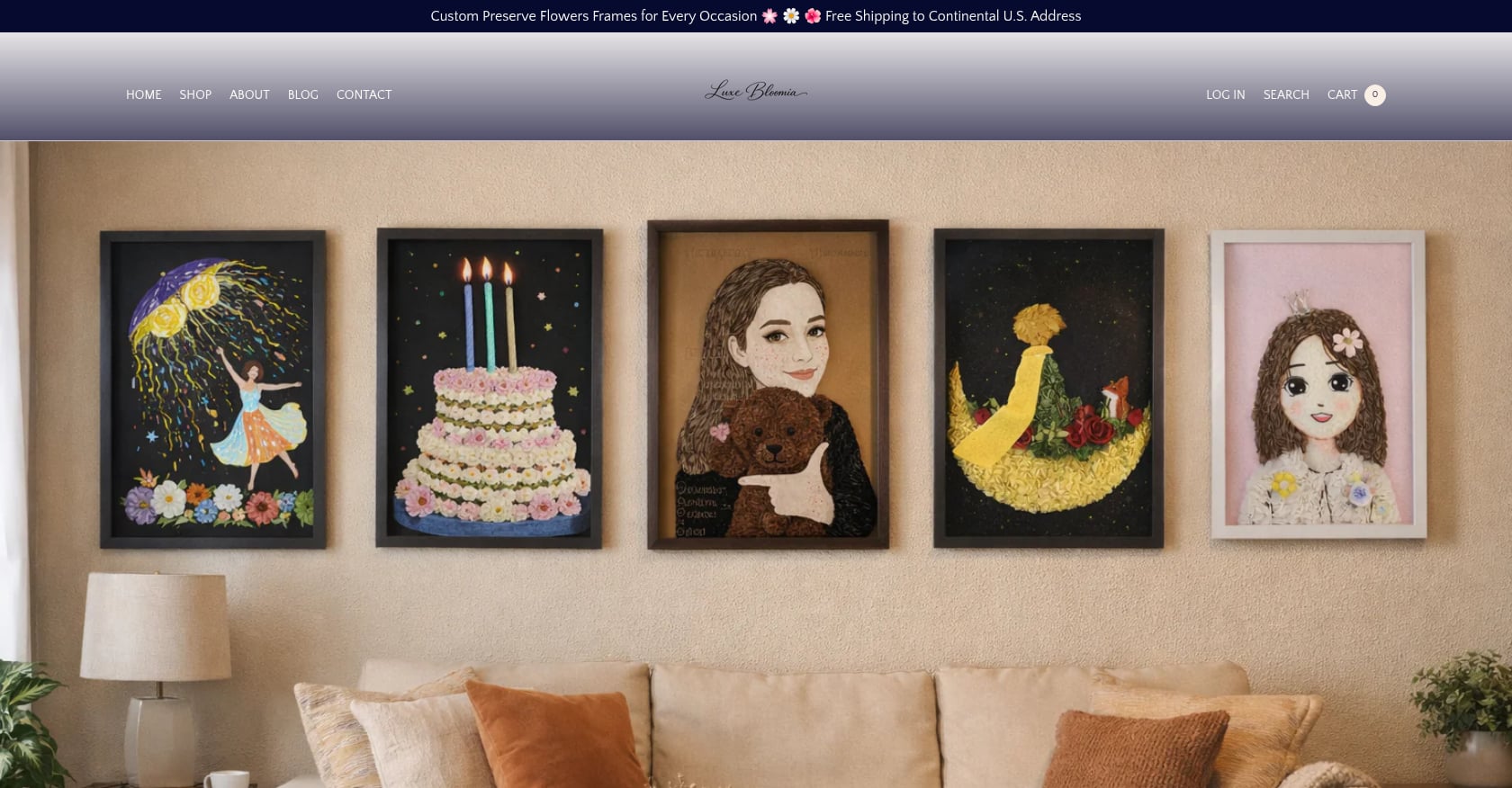
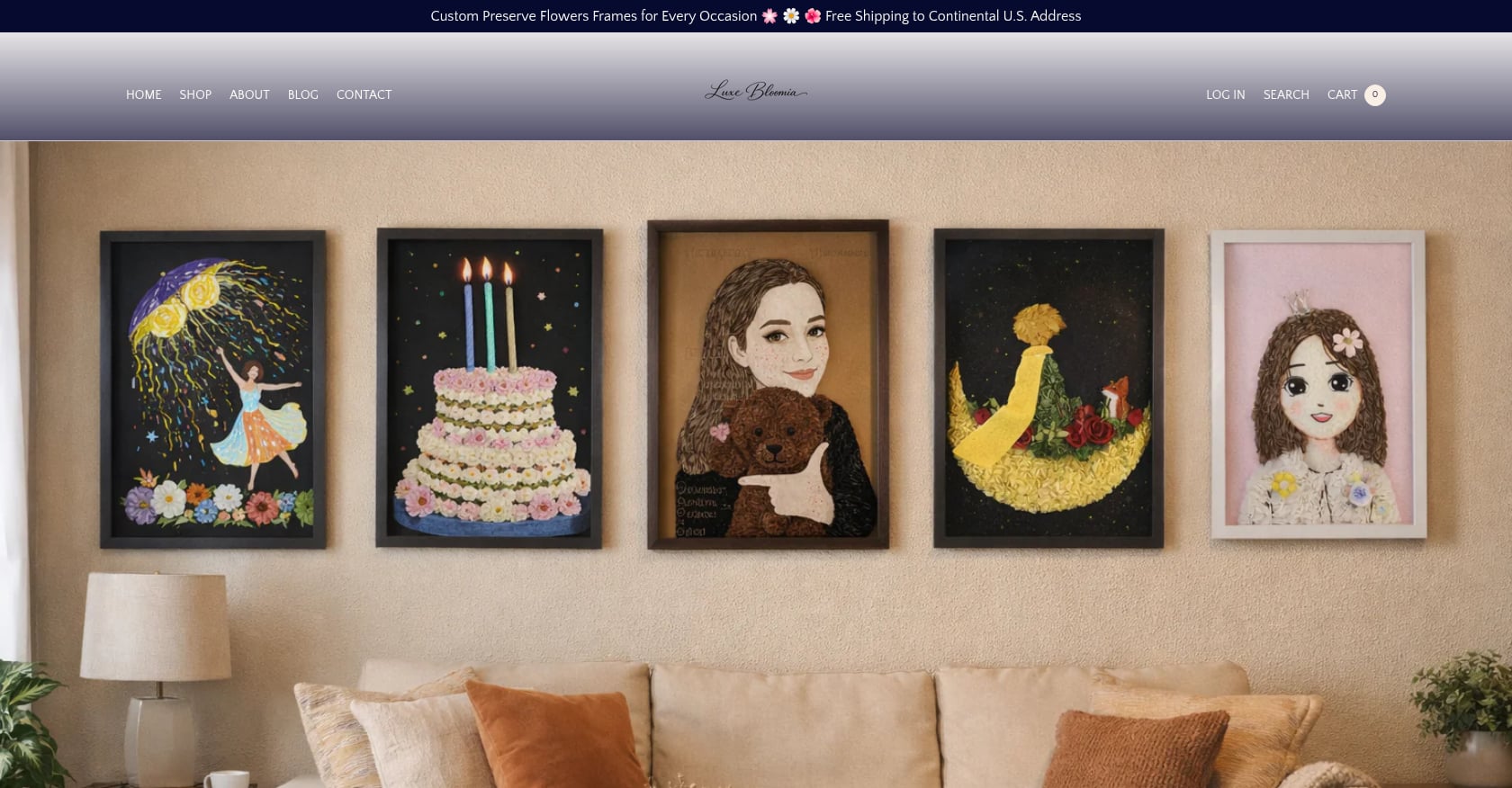
Luxe Bloomia, for example, hand-crafts preserved flower art in California using real flowers in museum-style frames. Their pieces last 2 to 5 years indoors with proper care, need no watering or sunlight, and ship free via FedEx to continental U.S. addresses. Collections span weddings and proposals, memorials, personal portraits, pets, and everyday gifts, with personalization options for adding names, dates, or custom elements.
Cost: Starting at $599.95, with most designs priced between $699.95 and $799.95.
Longevity: 2 to 5 years with proper care (keeping away from direct sunlight, humidity, and frequent touching).
Honest tradeoffs:
- Higher price point than DIY methods.
- These are pre-designed or custom compositions, not necessarily preservation of your specific flowers.
- Longevity, while measured in years, isn’t permanent. Care guidelines matter.
Best use cases:
- Wedding and proposal keepsakes (pieces like Will You Marry Me or Tree of Love)
- Memorial tributes
- Newborn celebrations (Welcome New Born Baby)
- Themed designs that go beyond basic bouquet pressing (celestial scenes, narrative art like Night Sky)
For people who want preserved flowers as a meaningful gift rather than a DIY project, professional preserved flower art removes every point of friction.
How to Choose the Right Preservation Method
The right method depends on four factors: your timeline, your budget, how you plan to display the flowers, and the type of flowers you’re working with.
If you need results today: Microwave drying (minutes) or wax dipping (1 hour).
If you want the longest-lasting results on a budget: Pressing with archival framing. Nothing else in the DIY category matches its multi-decade longevity.
If 3D shape matters: Silica gel for DIY, freeze-drying for professional quality.
If you want flowers that still feel soft: Glycerin preservation.
If the flowers are tied to a major life event and you don’t want to risk ruining them: Professional preserved flower art or freeze-drying. The stakes are too high for a first-time DIY attempt.
If you just want something pretty on a shelf: Air drying. It’s free and forgiving.
For custom pieces that mark a specific occasion, Luxe Bloomia’s custom framed flower portrait option lets you work with professionals to create something personalized. Have questions? Their contact page is the fastest way to get answers.
Tips That Apply to Every Preservation Method
Regardless of which technique you choose, these universal principles will improve your results:
Start immediately. The single biggest factor in preservation quality is freshness. Every hour between cutting and preserving means lost color and structural integrity. If you’re preserving wedding flowers, plan the method before the wedding day, not after.
Avoid sunlight. UV light degrades preserved flowers faster than anything else. Display them away from windows, or use UV-protective glass for framed pieces.
Control humidity. Moisture is the enemy of every preservation method except glycerin (which uses moisture deliberately). Keep preserved flowers in rooms with stable, low humidity. Bathrooms and kitchens are the worst display locations.
Handle with clean, dry hands. Oils from your skin can stain petals and attract dust. Some practitioners wear cotton gloves when arranging preserved flowers.
Seal your finished pieces. A light coat of unscented hairspray works for air-dried and silica-dried flowers. For pressed flowers, archival framing with UV glass is the best long-term protection. Professional pieces typically come sealed already.
Be realistic about color changes. When you hear that preserved flowers change color, some worry is natural. Some flowers darken. Some fade. White roses can turn the color of old paper. No preservation method keeps colors perfectly identical to the living flower forever. Setting realistic expectations up front prevents disappointment later.
Frequently Asked Questions
What is the cheapest way to preserve flowers without resin?
Air drying is completely free. Hang small bundles upside down in a dark, dry, ventilated space for 2 to 4 weeks. The tradeoff is shorter longevity (1 to 3 years) and significant color fading over time. For a near-free option with better color, try the borax and cornmeal desiccant method as a substitute for silica gel.
How long do pressed flowers last compared to resin?
Pressed flowers framed with archival materials and UV-protective glass can last decades. Resin begins yellowing within about 12 months, with thicker pieces degrading faster. Pressing actually outlasts resin for long-term preservation when done properly.
Can I preserve flowers without resin and still keep their 3D shape?
Yes. Silica gel drying is the best DIY method for maintaining three-dimensional form and color. Freeze-drying (professional service) produces even more lifelike 3D results but costs $150 to $1,000 or more depending on complexity. Glycerin preservation also maintains some 3D shape while keeping petals soft and flexible.
Is silica gel safe to use at home for flower preservation?
Silica gel is effective but requires precautions. It can cause skin and eye irritation, and the fine particles are harmful when inhaled. Always wear a mask and gloves. Work in a ventilated area and keep silica gel away from children and pets.
What flowers are hardest to preserve without resin?
Dense, moisture-rich flowers like lilies, tulips (for air drying), and peonies are challenging across most methods. Gauzy, thin-petaled flowers like poppies and azaleas don’t hold up to wax dipping. White flowers tend to discolor more noticeably regardless of method, often turning cream or yellowish over time.
How much does professional flower preservation cost?
Basic services like pressing or simple drying typically cost $150 to $250. Ornamental framed keepsakes run $300 to $500. Large custom shadow boxes and premium 3D displays can cost $700 to $1,000 or more. Professional preserved flower art from companies like Luxe Bloomia starts at $599.95 for museum-style framed pieces using real preserved flowers.
Can I use cat litter instead of silica gel?
Yes, non-clumping clay cat litter works as a desiccant alternative. It’s slower and less precise than silica gel, but it pulls moisture from petals using a similar principle. It’s significantly cheaper and available at any grocery store.
Should I preserve my wedding bouquet myself or hire a professional?
It depends on your comfort with risk. If the bouquet is irreplaceable and deeply sentimental, a professional service eliminates the chance of a DIY mistake destroying the flowers. If you’re comfortable experimenting and have backup flowers to practice with, pressing or silica gel drying can produce beautiful results at a fraction of the cost. The key is to start the preservation process the same day as the wedding, no matter which path you choose.