

8 Newborn Keepsake Preserved Floral Examples (2026 Guide)

TL;DR
Preserved floral newborn keepsakes range from $15 DIY shadow boxes to $1,499 museum-framed wall art. The eight most popular styles include narrative preserved flower art, pressed footprint frames, birth month flower frames, baby shadow boxes, resin blocks, flower jewelry, mini frames, and lightbox cast displays. Pressed and framed pieces can last decades, while glycerin-preserved arrangements hold up for two to five years with proper care. This guide covers every style with real pricing, longevity data, and honest DIY-vs-professional advice.
Why Preserved Floral Newborn Keepsakes Deserve a Closer Look
Fresh flowers from the hospital or a baby shower last about seven to fourteen days. That’s it. The bouquet that arrived on the most memorable day of your life wilts before you’ve even settled into a sleep schedule.
Preserved floral keepsakes solve that problem. Depending on the method, they last anywhere from two years to several decades, turning a fleeting arrangement into nursery art, a wearable locket, or a 3D display piece. The challenge is that there are so many styles available that comparing them without seeing real newborn keepsake preserved floral examples side by side feels impossible.
That’s what this guide is for. Below you’ll find eight distinct keepsake types, what each actually costs, how long it lasts, and whether you can pull it off yourself. Whether you’re shopping for your own nursery or hunting for a gift that won’t end up in a closet, one of these formats will fit.
Looking for a display-ready option? Explore the Welcome New Born Baby preserved floral frame, hand-crafted in California with real flowers and museum-style framing.
At-a-Glance Comparison Table
| Keepsake Type | Price Range | Longevity | DIY Possible? | Best For |
|---|---|---|---|---|
| Narrative Preserved Wall Art | $599–$1,499 | 2–5 years | No | Statement nursery art, gifting |
| Pressed Footprint Frame | $75–$215 | Decades (framed) | Difficult | Personal or memorial keepsake |
| Birth Month Flower Frame | $75–$185 | Decades (framed) | Moderate | Simple, meaningful gift |
| Baby Shadow Box with Flowers | $15–$200+ | Varies | Yes | Multi-element display |
| Resin Floral Block | $25 (DIY)–$600 (pro) | Indefinite | Risky | 3D preservation of actual flowers |
| Preserved Flower Jewelry | $50–$155 | Years (resin-sealed) | No | Mom’s wearable keepsake |
| Mini Frame or Floral Card | $50–$75 | Decades (framed) | Moderate | Budget gift, baby shower favor |
| Lightbox Frame with Casts | $300+ | Decades | No | Premium multi-sensory keepsake |
Now, the detailed breakdown of each newborn keepsake preserved floral example.
1. Narrative Preserved Flower Wall Art
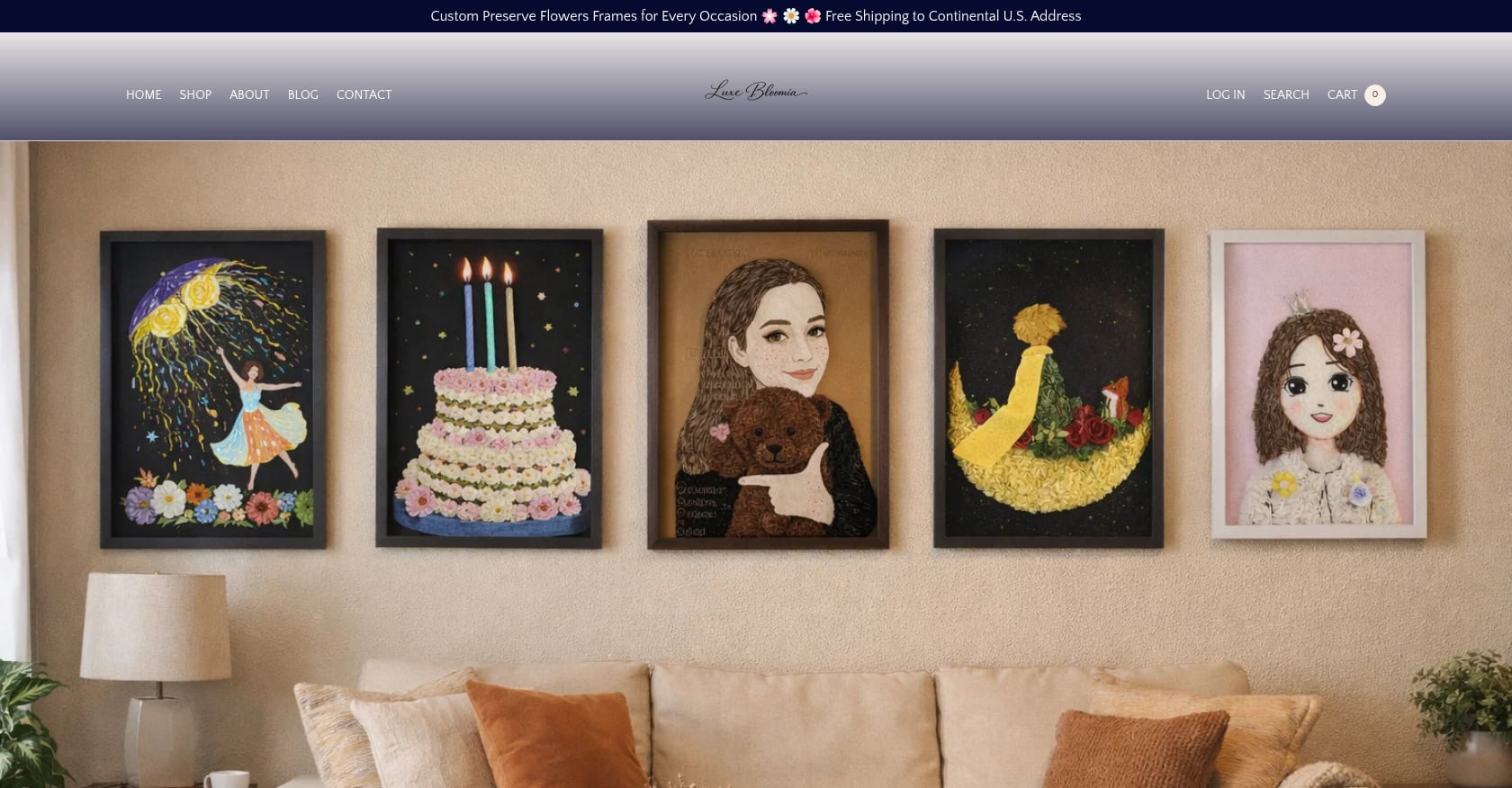
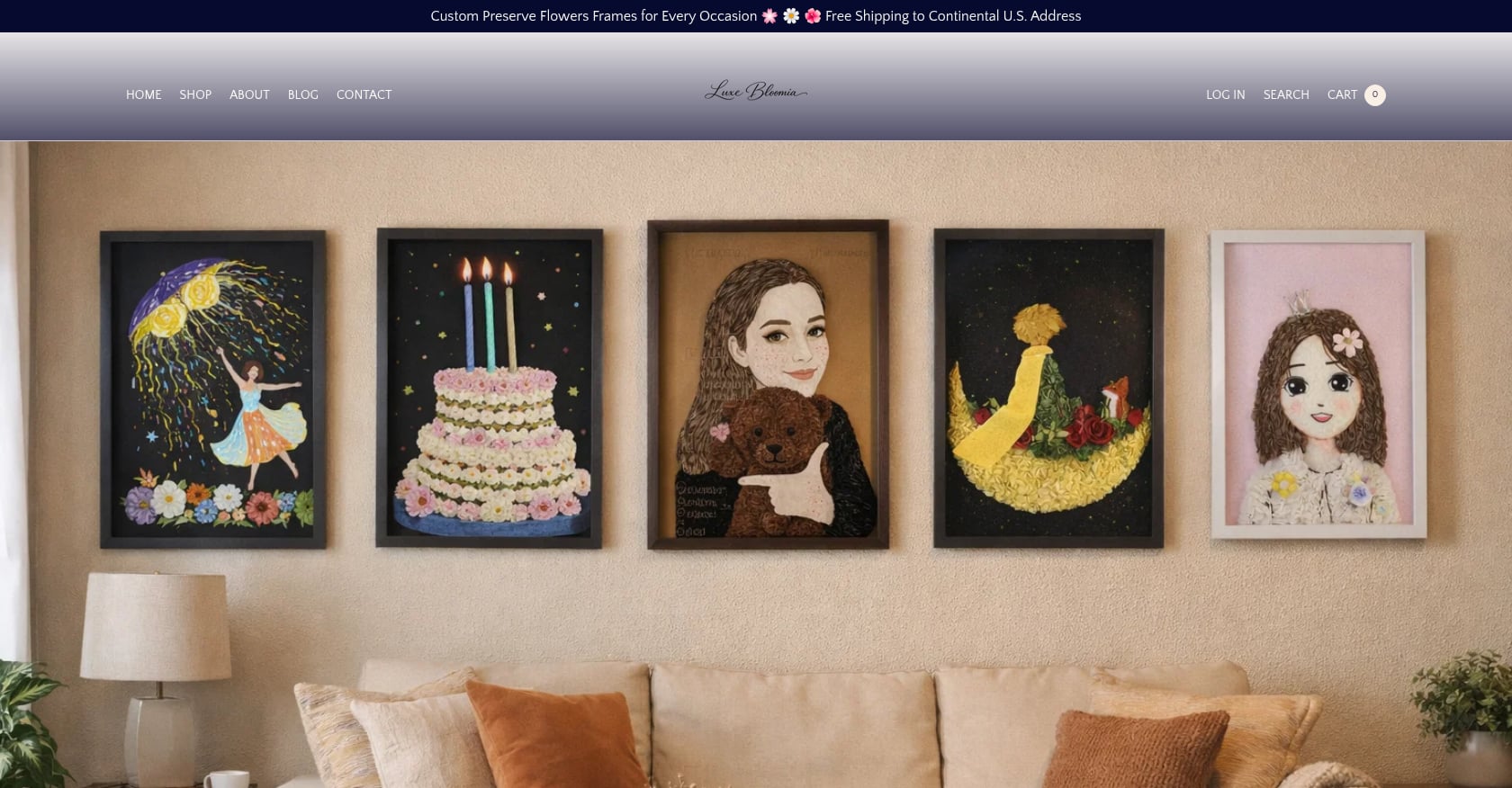
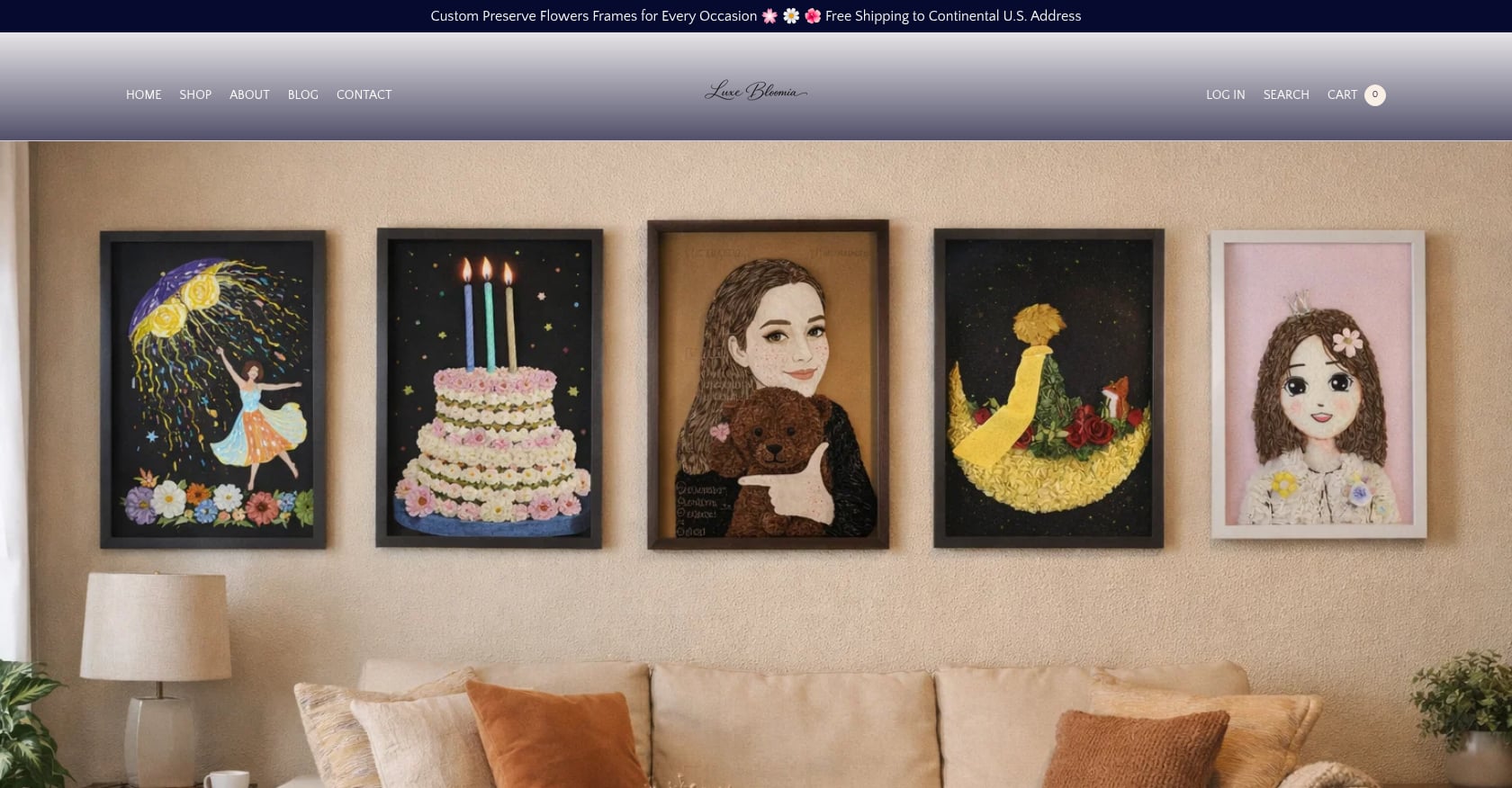
Best for: Parents or gifters who want a full-composition nursery art piece that tells a story, not just pressed petals behind glass.
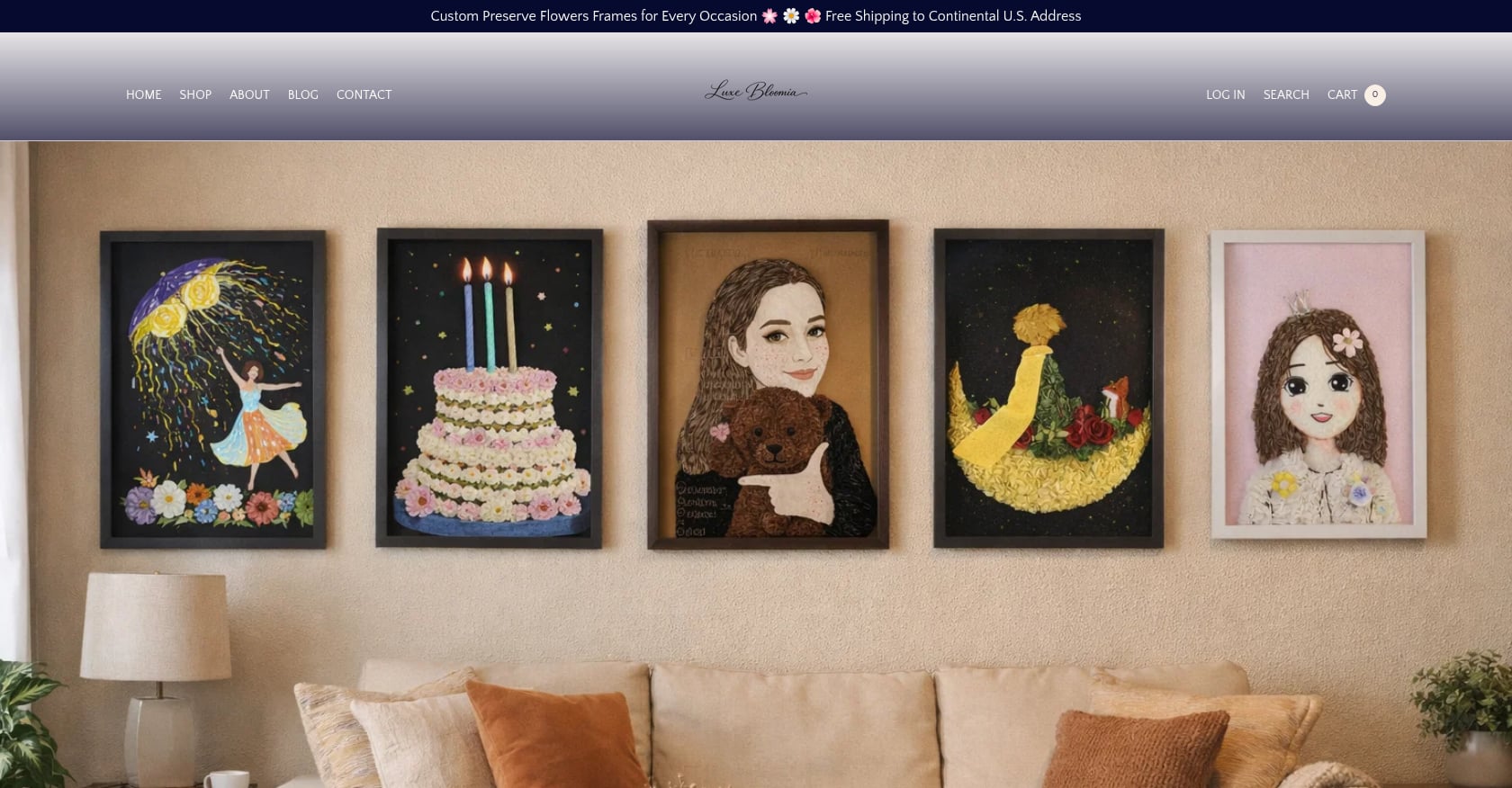
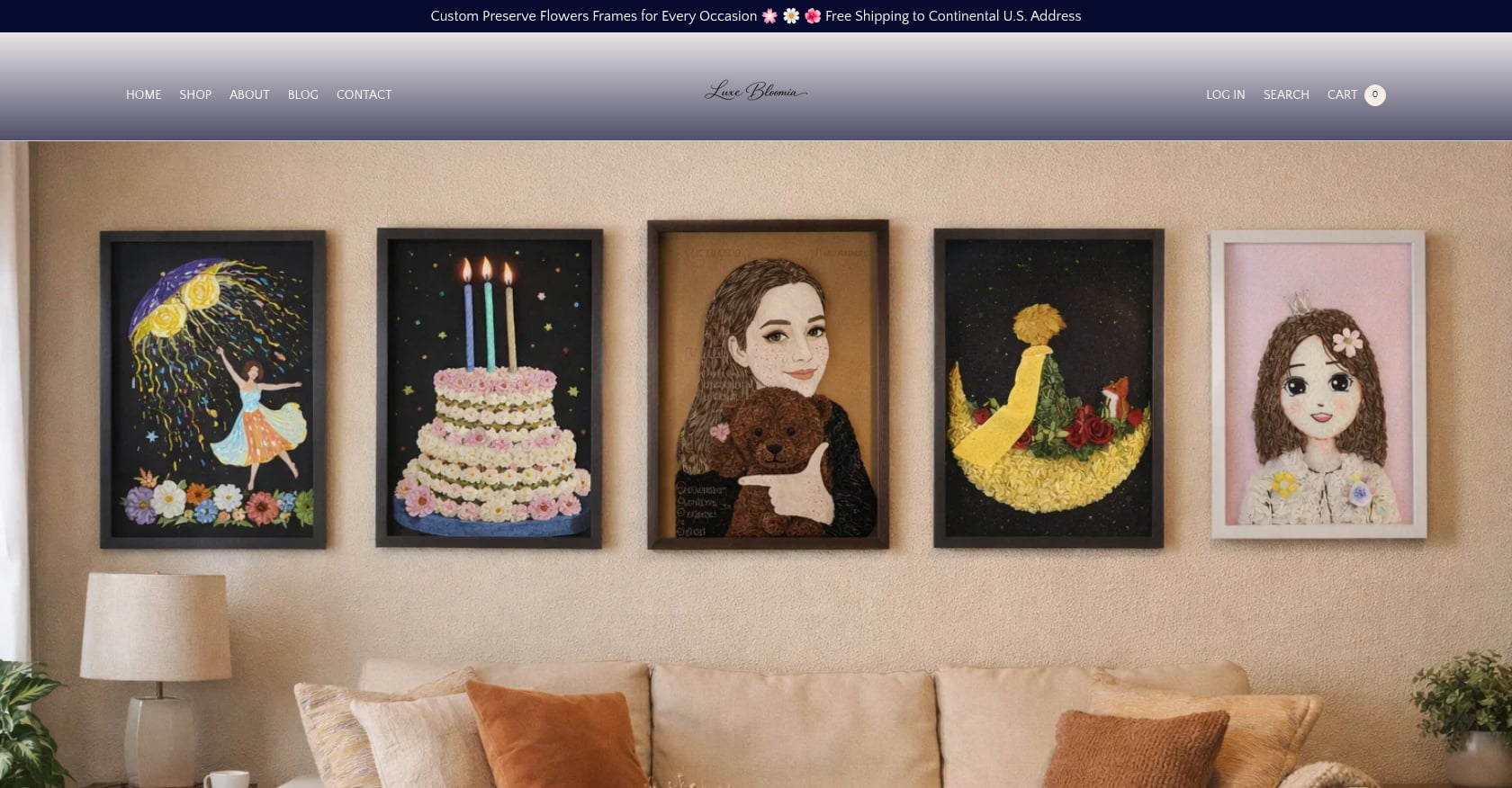
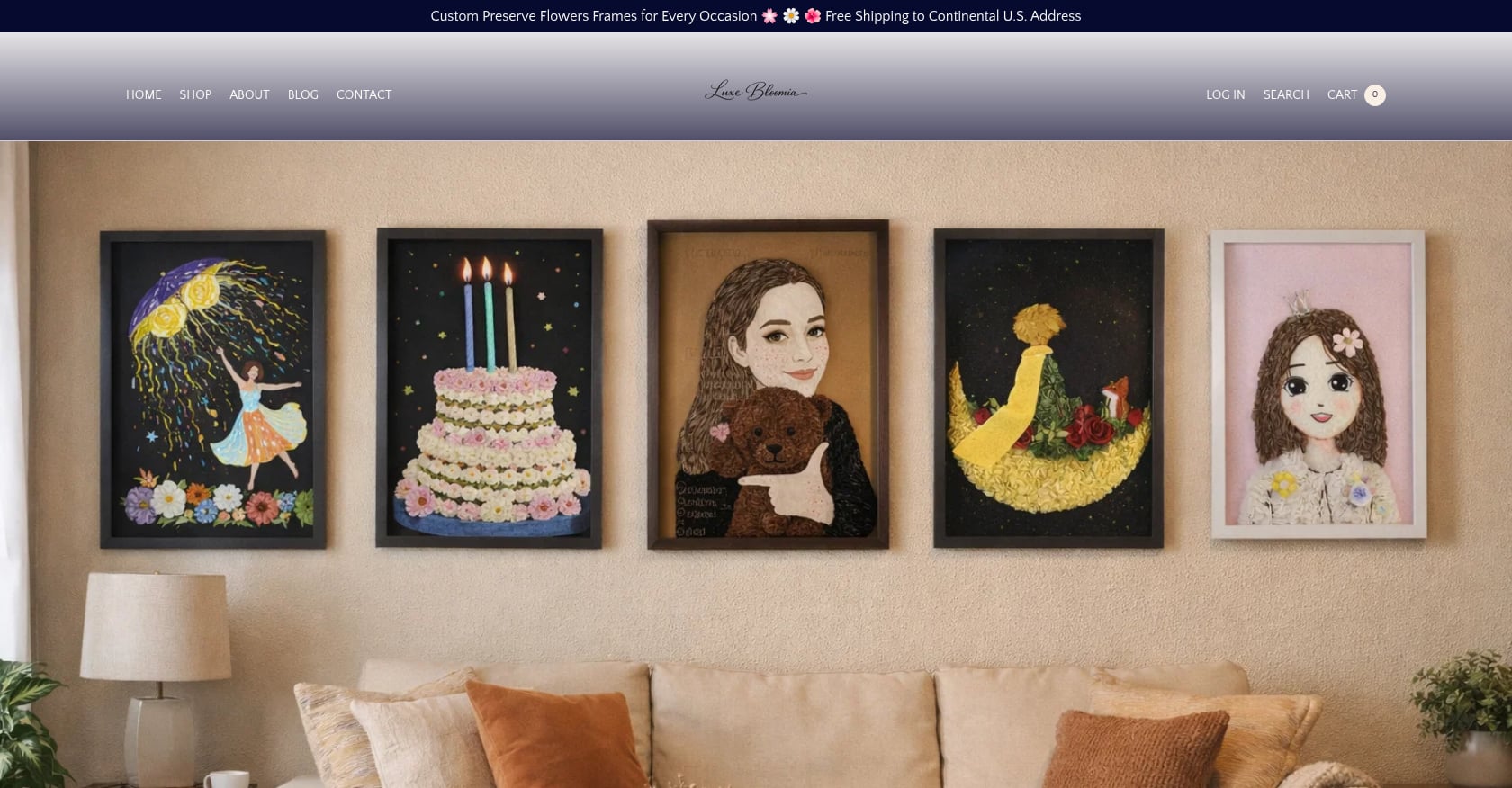
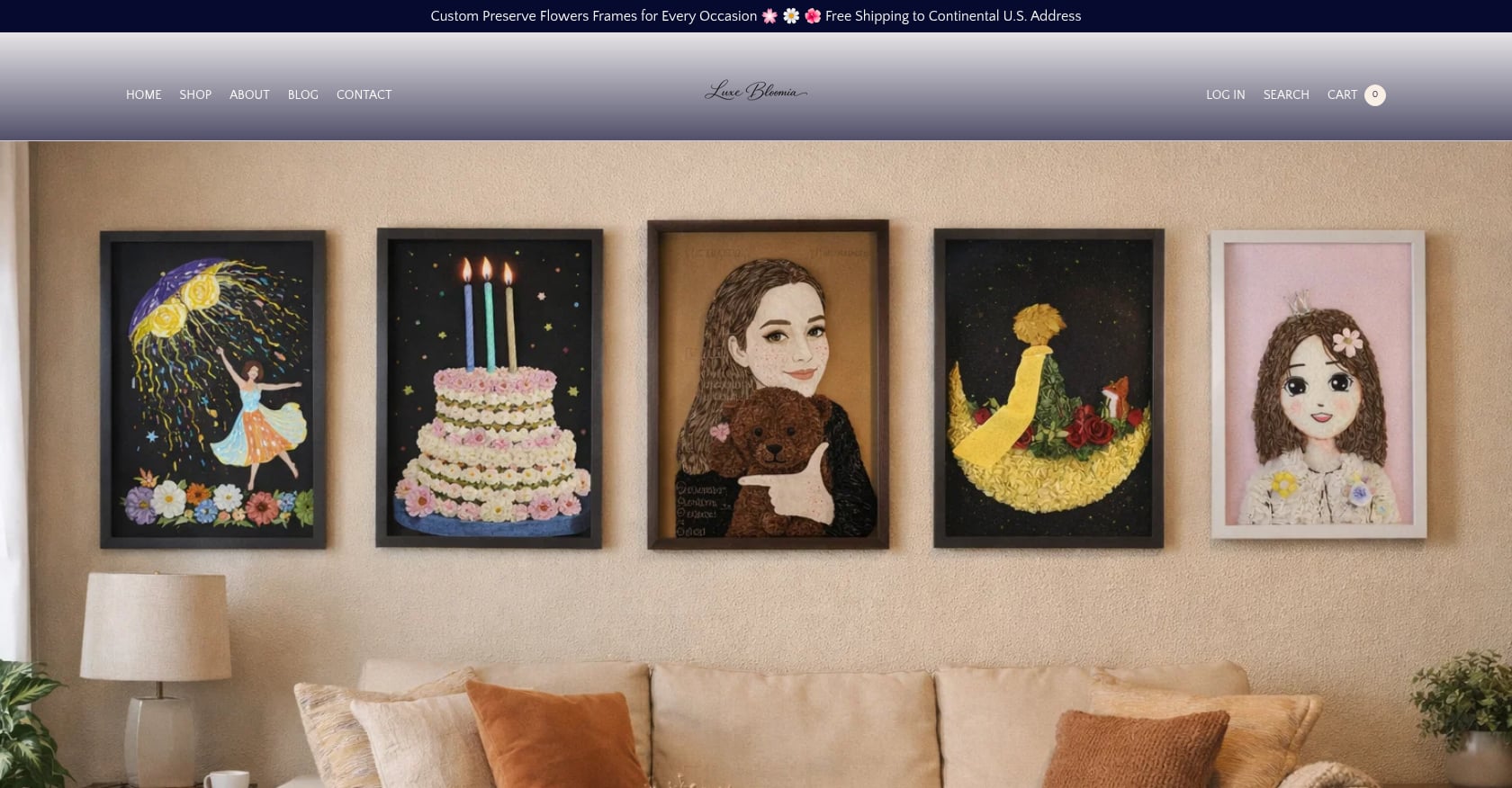
Unlike standard pressed bouquet services that preserve your specific flowers, narrative wall art uses real preserved blooms arranged into themed scenes: trees, celestial landscapes, spelled-out words, or figurative compositions. Think of it as a painting where the medium is actual flowers instead of oil or acrylic.
Key features:
- Real flowers preserved using glycerin-based solutions, maintaining texture and color
- Museum-style frames ready to hang immediately
- Themed designs built around newborn motifs (welcome scenes, nature imagery, childhood storytelling)
- Personalization options for adding baby’s name and birth date
Pricing: $599.95 to $1,499.95 depending on size and design complexity. Luxe Bloomia’s newborn collection, for example, includes the Welcome Baby frame and the Welcome New Born Baby design in this range, both hand-crafted in California and shipped free via FedEx to continental U.S. addresses.
Longevity: Two to five years indoors with proper care. That means no direct sunlight, no misting, and no placement near humidifiers. For detailed care protocols, see Luxe Bloomia’s preserved flower care guide.
Tradeoffs:
- Higher price point than DIY or basic pressed options
- You’re buying a pre-designed composition, not preserving your own specific bouquet
- Glycerin-preserved flowers don’t last as long as professionally pressed and sealed pieces
Why it stands out as a newborn keepsake preserved floral example: The narrative approach creates something that functions as genuine wall art. A story-driven design like Little Girl Under the Tree or The Prince on the Moon adds emotional depth that a flat pressed arrangement can’t match. For parents designing a themed nursery, these pieces anchor the room.
2. Custom Pressed Flower Footprint Frames
Best for: Parents who want to combine their baby’s physical imprint with botanical art. Also carries deep significance for memorial and loss keepsakes.
This style takes the baby’s actual footprints (submitted as a digital scan or physical copy) and recreates every curve and detail using real hand-pressed flower petals. Each petal is individually placed to mirror the unique shape of the baby’s feet. It’s part portraiture, part preservation.
Key features:
- Uses real pressed blooms, not printed or artificial flowers
- Recreates the exact proportions and details of baby’s footprints
- Typically framed in archival-quality glass
- Some providers offer handprint versions as well
Pricing: Starting around $215 for a standard footprint set from specialists like Pressed Floral. Simpler versions on Etsy start closer to $75.
Longevity: Decades if properly framed and kept out of direct UV light. Pressed flowers lose moisture during the flattening process, which is exactly what makes them shelf-stable for so long.
Tradeoffs:
- Requires sending in footprint copies, which means you need a clean print from the hospital or an at-home ink pad session
- Typical turnaround is two to three weeks
- Quality varies dramatically between providers
Real user perspective: One Etsy buyer shared a review that captures the emotional weight of these pieces: “Having this keepsake means the world to me. I lost my baby recently and I keep this on my nightstand so I can see her tiny feet everyday.” This isn’t just decor. For many families, pressed footprint frames carry serious emotional significance.
3. Birth Month Flower Frames
Best for: Gifters looking for a personalized yet simple-to-order keepsake that requires no footprints, no bouquet shipping, and no design consultations.
The concept is straightforward: a real, hand-pressed bloom representing the baby’s birth month, displayed in a clean frame. The flower carries built-in symbolism (more on that in the birth month reference table below), which gives the piece meaning beyond its visual appeal.
Key features:
- Single or small-cluster bloom arrangement representing the birth month
- Available in multiple frame sizes (commonly 6x6, 8x8, or 10x10)
- Each pressed flower is unique due to natural color variation during pressing
- No need to send in personal flowers or prints
Pricing: $75 to $185 depending on size and provider.
Longevity: Decades when framed with UV-protective glass. For a deeper look at what affects pressed flower lifespan, read this guide on how long pressed flowers last.
Tradeoffs:
- Availability can depend on the flower’s seasonality
- Color during pressing differs from the fresh bloom’s original hue, so expect variation
- Less personal than a footprint frame or a piece made from the baby’s actual hospital flowers
Pairing idea: For a celestial nursery theme, combine a birth month flower frame with a complementary preserved art piece. A baby born in July (larkspur) pairs beautifully with moonlit or night-sky designs.
4. Baby Shadow Box with Preserved Flowers
Best for: DIY-minded parents who want to curate a multi-element display combining flowers with hospital mementos.
A shadow box is essentially a deep-set frame that accommodates three-dimensional objects. Parents fill them with a combination of dried or preserved flowers and keepsakes from the first days: the hospital ID bracelet, birth announcement card, first hat, tiny booties, or a onesie clip.
Key features:
- Accommodates both flat and 3D items in one display
- Fully customizable layout, you choose what goes in
- Items are typically pinned or adhered to a fabric-covered backing
- Deep frames available in various sizes and finishes
Pricing: Basic shadow box frames run $10 to $30 from major retailers for DIY assembly. Professional or custom-assembled versions on Etsy range from $50 to $200+.
Longevity: Highly variable. The frame itself lasts indefinitely, but the flowers inside depend entirely on how well they were dried before placement. This is the make-or-break factor.
Tradeoffs:
- Flowers must be completely dried before going in, or they will mold inside the sealed frame
- Arranging items attractively takes more effort than expected
- Results range from Pinterest-worthy to disappointing depending on execution
Critical warning: If you’re preserving actual flowers for a shadow box, practitioners in online forums consistently emphasize that rushing the drying process is the number one cause of mold. Flowers need to be fully dried (not just wilted) before you seal them behind glass. For practical drying techniques, this shadow box preservation guide covers the steps.
5. Resin-Preserved Floral Keepsake Blocks
Best for: Parents who want to preserve their specific hospital or celebration flowers in a three-dimensional, forever format.
Resin preservation encases real flowers in clear epoxy or casting resin, creating paperweights, bookends, coasters, or freestanding display blocks. When done well, the flowers appear suspended in glass, frozen in their original form.
Key features:
- Preserves the actual 3D structure of the flower (not flattened)
- Creates a durable, solid piece that’s essentially permanent
- Can be shaped into functional objects (coasters, bookends) or pure display pieces
- Professional versions often include UV-resistant resin formulations
Pricing: DIY kits start around $25 to $50. Professional resin preservation services typically charge $150 to $600+ depending on the size and complexity of the arrangement.
Longevity: Indefinite for the resin itself, though UV damage can yellow the block over time without protective additives.
Tradeoffs:
- DIY is genuinely risky for irreplaceable flowers
- Flowers must be 100% dried before encapsulation, or trapped moisture causes rot and mold inside the block weeks later
- Pouring too much resin at once generates heat that can literally cook and burn the flowers
- Professional services require mailing fresh flowers within one to two days of receiving them
Practitioners on Reddit and resin-crafting forums are blunt about this: craft store resin kits are fine for small weekend projects with grocery store flowers, but they are incredibly risky for irreplaceable items. The mixing ratios, curing conditions, and handling requirements leave little room for error, and with one-of-a-kind birth flowers, there’s no second attempt if something goes wrong.
Bottom line: This is one of the best newborn keepsake preserved floral examples in terms of longevity, but it’s the worst choice for a first-time DIY project with flowers that can’t be replaced.
6. Preserved Flower Jewelry for New Moms
Best for: A gift for the new mother who wants to carry the memory of her baby’s arrival every day, not just see it on a wall.
Preserved flower jewelry takes real pressed petals or tiny blooms and sets them in resin bezels, lockets, or pendants. Birth flower necklaces have become particularly popular, matching the baby’s birth month to a specific bloom.
Key features:
- Real pressed flowers or petals sealed in resin within jewelry settings
- Birth month flower options add personalized symbolism
- Available as necklaces, lockets, bracelets, and earrings
- Gold-filled and sterling silver options at various price points
Pricing: $50 to $155 depending on materials and complexity. Specialist providers offer birth flower necklaces starting around $75, with gold-filled lockets featuring sealed photos and real preserved blooms running closer to $145.
Longevity: Several years with normal wear. The resin seal protects the flower from moisture and air, but daily wear introduces scratches and friction over time.
Tradeoffs:
- Not DIY-friendly due to the precision required for small-scale resin work
- Jewelry pieces are inherently more fragile than framed art
- Color of pressed flowers may shift over years of wear
This is a category where the preserved floral newborn keepsake serves double duty: it celebrates the baby and honors the mother. Many buyers pair a jewelry piece with a framed keepsake as a combined gift.
7. Mini Frames and Floral Greeting Cards
Best for: Budget-conscious gifters, baby shower party favors, or thoughtful gifts for grandparents and extended family.
Not every newborn keepsake needs to be a statement piece. Mini frames (around 2.5 by 2.5 inches) and greeting cards with real pressed flowers offer a smaller-scale alternative that still carries genuine meaning.
Key features:
- Single preserved bloom representing a birth flower or meaningful variety
- Compact enough for a nightstand, desk, or shelf display
- Greeting card versions can be mailed directly
- Appropriate as thank-you gifts for baby shower guests
Pricing: $50 to $75 for mini frames. Greeting cards with real pressed flowers start lower.
Longevity: Decades for framed versions. Cards are more vulnerable unless the recipient frames them.
Tradeoffs:
- Limited visual impact compared to larger formats
- Single-bloom compositions offer less variety
- May feel too modest as a standalone new baby gift for close family
If you want to add personalization like a name and birth date, even a small frame becomes significantly more meaningful.
8. Lightbox Frames with Flowers and Casts
Best for: Parents who want the most premium, multi-sensory newborn keepsake that combines botanical preservation with sculptural elements.
This is a newer format that’s been trending on Instagram. Lightbox frames combine preserved flowers with actual hand and foot casts of the baby, arranged together in a custom-lit deep frame. The result is part art installation, part family heirloom.
Key features:
- Real preserved flowers arranged alongside 3D hand and foot casts
- Custom lightbox framing with built-in illumination
- Creates a multi-textural piece (soft petals, solid casts, warm light)
- Typically requires an in-person casting session or at-home kit
Pricing: $300+ for professional versions, with highly custom pieces running significantly higher.
Longevity: Decades. The casts are permanent, and the flowers (when properly preserved and sealed) last just as long as any framed pressed arrangement.
Tradeoffs:
- Requires coordination between a casting provider and a floral preservationist
- Higher price point limits this to a gift-to-self or a premium group gift
- Not widely available yet, so finding a local provider may take research
The #1 ranking Instagram result for newborn keepsake preserved floral examples at the time of writing specifically showcases a lightbox frame with “baby’s first flowers, lovingly preserved alongside their hand and foot casts.” It’s the kind of piece that stops people mid-scroll.
How Long Do Preserved Floral Keepsakes Actually Last?
This is the question every parent asks, and most websites give vague answers. Here’s a method-by-method breakdown based on preservation science and practitioner experience.
Pressed flowers in a sealed frame: Decades, potentially a lifetime. Pressing removes moisture completely, and UV-protective glass shields against the primary degradation factor (sunlight). These are the longest-lasting format for flat floral keepsakes.
Glycerin-preserved flowers (3D arrangements and wall art): One to three years on average. High-quality preserved arrangements in ideal conditions, meaning low humidity, no direct sun, and stable temperatures, can maintain their appearance for up to five years. Flowers kept in a sealed display case can push closer to a decade.
Resin-encased flowers: The flowers themselves last indefinitely, but the resin may yellow from UV exposure over time. Keeping resin pieces away from windows extends their clarity.
Color behavior worth knowing: Dark purple, red, and blue flowers retain their color naturally for several years. White roses, coral garden roses, and yellow flowers are prone to faster fading. Color shift is the first sign of aging and typically begins after the one-year mark under average conditions.
Nursery-Specific Care Tips
Here’s something no competing guide mentions: nurseries are actually one of the best rooms in the house for preserved floral keepsakes. Most nurseries have blackout curtains (UV exposure is the number one destroyer of preserved flowers), and parents tend to keep them at consistent, moderate temperatures.
The one major exception: humidifiers. Nurseries often run humidifiers for baby’s comfort, and moisture is the enemy of preserved flowers. Never place a preserved floral keepsake directly near a humidifier. Across the room is fine. On the same shelf? That’s asking for trouble.
Additional care rules:
- Never mist or water preserved flowers. They need zero moisture.
- Avoid touching petals with bare hands. Oils accelerate degradation.
- Dust gently with a soft brush, never a damp cloth.
For the full breakdown on keeping preserved art in top condition, the Luxe Bloomia FAQ page covers dos and don’ts in detail.
DIY vs. Professional Preservation: An Honest Assessment
Many parents consider doing their own flower preservation. That impulse makes sense: it’s more personal, often cheaper, and you control the timeline. But the right choice depends entirely on what flowers you’re working with.
When DIY works well:
- Extra flowers from a baby shower or hospital visitors (not the one arrangement you care about most)
- Grocery store blooms bought specifically for a practice project
- Shadow box assembly using pre-dried flowers
- Simple pressing with a flower press or heavy book, destined for a basic frame
When professional preservation is worth the investment:
- The actual hospital bouquet or birth flowers that can’t be replaced
- Resin encapsulation (the margin for error is razor-thin with irreplaceable blooms)
- Any project where you want gallery-quality results
The core problem with DIY resin work is that it puts you in full creative control, but resin has specific mixing ratios, curing conditions, and handling requirements. First-time results often look nothing like what you envisioned, and there’s no redo with one-of-a-kind flowers.
The third option: Skip preservation logistics entirely by choosing pre-designed preserved floral art. Pieces like Luxe Bloomia’s newborn collection use flowers that have already been professionally preserved and composed into finished artwork. You’re buying a completed keepsake, not sending flowers away and waiting. For a deeper look at why professionals outperform DIY on high-stakes projects, see this professional preservation guide.
Hospital Flower Timing Warning
If you do want to preserve your baby’s actual hospital flowers through a professional service, timing is critical. Most resin and pressing specialists require that you mail or deliver fresh flowers within one to two days of receiving them. After that, cellular breakdown makes quality preservation significantly harder. Have your chosen provider’s shipping instructions ready before the baby arrives, not after.
Birth Month Flowers: Complete Reference Table
Pairing a baby’s birth month with its associated flower adds a layer of symbolism to any preserved floral newborn keepsake. Here’s the standard reference:
| Month | Primary Flower | Alternate Flower |
|---|---|---|
| January | Carnation | Snowdrop |
| February | Violet | Primrose |
| March | Daffodil | Jonquil |
| April | Daisy | Sweet Pea |
| May | Lily of the Valley | Hawthorn |
| June | Rose | Honeysuckle |
| July | Larkspur | Water Lily |
| August | Gladiolus | Poppy |
| September | Aster | Morning Glory |
| October | Marigold | Cosmos |
| November | Chrysanthemum | — |
| December | Narcissus | Holly |
Color symbolism for newborn keepsakes: Green represents new life, pink symbolizes love, white stands for purity and innocence, and purple conveys understanding and prosperity. When choosing preserved flowers for a baby-themed piece, these color families tend to resonate most.
How to Choose the Right Keepsake for Your Situation
With eight different styles of newborn keepsake preserved floral examples, the decision comes down to three factors.
Budget: Under $100, look at mini frames, floral greeting cards, or DIY shadow boxes. Between $100 and $300, birth month frames, pressed footprint frames, and flower jewelry offer strong value. Above $300, narrative wall art, professional resin blocks, and lightbox frames deliver heirloom-quality results.
Intent (gift vs. self-purchase): Buying for someone else? Birth month frames and narrative wall art are safe choices because they don’t require the recipient to do anything (no sending in flowers or footprints). Buying for yourself? Footprint frames and lightbox casts create the most intensely personal keepsakes.
Aesthetic: Minimalist nursery? A single birth month bloom in a clean frame. Storybook nursery? Narrative preserved art with characters and scenes. Modern? Resin blocks as bookends or shelf objects. Sentimental? Footprint frames or shadow boxes packed with hospital memories.
Whatever direction you choose, the fundamental appeal is the same: real flowers, preserved to outlast the blur of early parenthood, turning a moment into something you can see and touch for years.
Ready to find your piece? Browse the Welcome New Born Baby collection, or contact the Luxe Bloomia team to discuss custom ideas for your nursery.
Frequently Asked Questions
How long do preserved floral newborn keepsakes last?
It depends on the method. Pressed flowers in UV-protective frames can last decades. Glycerin-preserved arrangements maintain their appearance for two to five years in ideal conditions. Resin-encased flowers last indefinitely, though the resin itself may yellow with UV exposure over time.
Can I preserve my baby’s hospital flowers at home?
You can, but results vary. Simple pressing (using a heavy book or flower press) works well for flat flowers destined for a basic frame. Resin encapsulation at home is risky because improper drying, wrong mixing ratios, or excessive heat can ruin irreplaceable flowers. For hospital bouquets that truly matter, professional services are safer.
What’s the best newborn keepsake preserved floral example for a baby shower gift?
Birth month flower frames are the most reliable choice. They’re personalized (tied to the baby’s due date), don’t require the recipient to send in anything, and fit most nursery aesthetics. Mini frames at $50 to $75 also work well for shower guests looking for a thoughtful budget option.
Should I keep preserved floral art away from my baby’s humidifier?
Yes. Moisture is the primary enemy of preserved flowers. While nurseries with blackout curtains are actually excellent environments (low UV), the common use of humidifiers creates a conflict. Place preserved keepsakes on the opposite side of the room from any humidifier or moisture source.
What’s the difference between preserved and pressed flowers?
Preserved flowers (typically treated with glycerin) maintain their three-dimensional shape, softness, and much of their original color. They last one to five years. Pressed flowers are flattened and dried completely, removing all moisture. They lose dimension but gain longevity, lasting decades when properly framed.
How quickly do I need to preserve hospital flowers?
Most professional preservation services recommend submitting flowers within one to two days of receiving them. After that, cellular breakdown makes it much harder to achieve quality results. If you know you want to preserve your birth flowers, arrange the logistics before your due date.
Are resin flower keepsake blocks safe for a nursery?
Fully cured resin is inert and safe for display anywhere in the home, including a nursery. The concern is during the curing process (strong fumes, exothermic reactions), which is another reason to leave resin work to professionals rather than doing it in your home while caring for a newborn.
What preserved floral keepsake offers the best value for the price?
Birth month flower frames ($75 to $185) offer the strongest combination of personalization, longevity (decades), and affordability. For parents willing to invest more, narrative preserved wall art ($599 to $1,499) delivers the most visual impact per dollar, since these function as genuine nursery art rather than a small accent piece.